
Votre panier est vide
Besoin d'inspiration ?
Rendez-vous dans le programme en ligne du GrandPalais
Article -

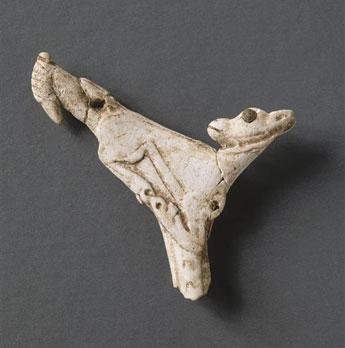
Prehistory began with the emergence of the first stone tools. These artefacts (manufactured objects) prove the capacity of some hominids to conceive of shapes and manufacture objects. The method of flaking used and the shapes they created enable us to assess their expertise and ingenuity. Archaeologists are specialists who research and study Prehistoric man’s materials and lifestyle. They have divided the Prehistoric era into three main periods: the Palaeolithic, the Mesolithic and the Neolithic.
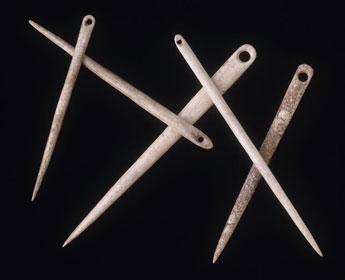
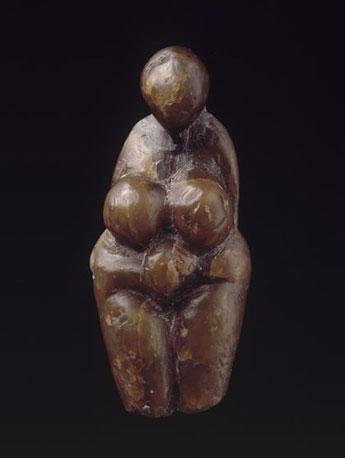
The first tools Palaeolithic means "old stone". It is the first period in Prehistory, during which man invented his first stone tools. The stone used, for instance flint, was flaked. The oldest known tools date from around 2.7 million years ago. Homo habilis (skilled man) designed the first choppers and chopping tools. Then Homo ergaster and Homo erectus invented bifacial tools and the axe. They dressed and then shaped stone. Neanderthal man (from the name of a German site) began to dress flint. He broke off splinters which he reworked. Homo sapiens sapiens ((Cro-Magnon man, named after a site in the Dordogne, France) invented a wide range of tools and in particular used bone and reindeer antler. The first graves Neanderthal and Cro-Magnon man were unlike other hominids. They buried their dead and decorated them with jewellery and coloured pigments. Did they believe in an after-life? By doing this, they clearly demonstrated that they felt emotions about losing one another. The first images Another sign of consciousness is art. Homo sapiens sapiens who outlived the Neanderthals, would be the first to indulge in "artistic activity”. Around 35,000 years ago in Europe, he drew symbols on the walls of caves and produced the first figures (parietal art from the caves of Chauvet, Cosquer, Lascaux, etc.). He especially represented animals which existed in his environment. Then 27,000 years ago, he began sculpting female statuettes with opulent shapes which we call “Venuses”. By improving his tools and making them more specialist Homo sapiens sapiens engraved and sculpted many objects with a great deal of skill. As well as stone, dressed and shaped to cut, grind, hit, scrape and puncture, other materials were used such as bone and reindeer antler. They were transformed into discs, sticks, spears, spear throwers, needles for sewing hides, harpoons for fishing, tubes for throwing paint, flutes, etc. The Palaeolithic was a nomadic period. In quest of food to survive and raw materials for tools, man roamed about. In Europe, he lived in an often inhospitable and cold world in which mastery of fire certainly enabled him to survive.
During the Mesolithic, 12,000 years ago, the climate in Europe became milder. It rained a lot, the seas rose and the forests grew. Man adapted to the change. He was still nomadic and continued to hunt. He made microliths which he set into wooden or bone handles. He invented the bow and arrow. His tools were called "composite" as they used different materials. In Spain, rupestral art (painting on rock faces outside) shows scenes of hunting with bows.
In the Neolithic, which began 12,000 years ago in the Middle East and 8000 years ago in Europe, humans developed agriculture and domesticated animals. He became sedentary. This means he settled for long periods of time in places suitable for cultivating grain and breeding sheep or cows. He began building more durable houses and villages. He created the first pots which he baked on the fire. In Africa (Sahara), rupestral paintings have survived from this period. They adorn rock faces and show Neolithic pastoral scenes. In Europe, communities built the first megalithic monuments: menhirs, dolmens and cromlechs. These may have been designed to worship gods…
Votre panier est vide
Besoin d'inspiration ?
Rendez-vous dans le programme en ligne du GrandPalais

SISTERS, Jim Britt, 1976
Girls
Exhibitions Upcoming
Adolescence, Fashion, Rebellion
December 9, 2026 - March 21, 2027

Mika Ninagawa
with EiM
Alive with Shadows
Exhibitions Upcoming
December 16, 2026 - March 21, 2027

Paul Cezanne, La Montagne Sainte-Victoire au grand pin, vers 1887, huile sur toile, 66.8 x 92.3 cm
Exhibitions
September 23, 2026 - January 17, 2027

Paris Photo, 2025
Salons & foires Upcoming
November 12 - November 15, 2026

Chroma XXIII (2003-2025) Darmstadt Ferienkurse 2025 Justus Liebig Haus
Rebecca Saunders, Ensemble Intercontemporain
Chroma I–XXIV (2003–26)
Shows & performances Upcoming
Nouvelle version XXIV
November 21, 2026 - Sold out on our website
See content : 5 things to know about Paul Cezanne before visiting the exhibition

Paul Cezanne, Pichet de grès, 1893-1894, Fondation Beyeler, Riehen-Bâle
Article -
Considered one of the pioneers of modern art, Paul Cézanne had a profound impact on art history. Yet his work long baffled his contemporaries. Why did he paint so many apples? Which artists did he inspire? And why does his work resonate so strongly today? Here are five keys to better understanding his influence before visiting the exhibition “Cezanne and Us,” on view at the Grand Palais through January 17, 2027.
Widely regarded as one of the pioneers of modern art, Paul Cezanne left a profound mark on art history. Yet his work long baffled his contemporaries. Why did he paint so many apples? Which artists did he inspire? And why does his work resonate so powerfully today? Here are five key insights to help you understand his influence before exploring "Cezanne and Us", on view at the Grand Palais until January 17, 2027.
See content : Mika Ninagawa with EiM, "Alive with Shadows": Tickets are now on sale!

Article -
Vibrant flowers and saturated colors, plays of light, and immersive sensory installations: from December 16, 2026, to March 21, 2027, Mika Ninagawa takes over the Grand Palais with her collective EiM to present an exhibition designed to be walked through...
See content : "Cezanne and us": 5 resources to guide you

Paul Cezanne, La Montagne Sainte-Victoire au grand pin, vers 1887, huile sur toile, 66.8 x 92.3 cm
Article -
At the Grand Palais, the works of Cezanne and the artists he inspired await you. To make your visit an unforgettable experience, we’ve put together a range of helpful tools to guide you through the exhibition, deepen your understanding, create lasting...