
Votre panier est vide
Besoin d'inspiration ?
Rendez-vous dans le programme en ligne du GrandPalais
Article -

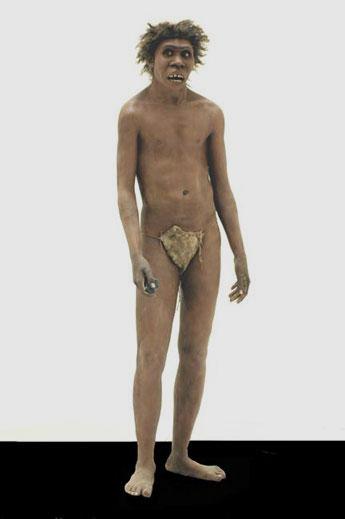
The "hominid" family emerged around nine million years ago. It included, as it does today, four “lines”: chimpanzees, gorillas, bonobos and humans. The first members of the human line, our distant ancestors, seem to have emerged seven million years ago. What distinguished them from other apes, our cousins, and makes them similar to us, Homo sapiens sapiens , is that they were bipedal: they walked on two legs, like us. The oldest footprints date from 3.5 million years ago. They were discovered in Laetoli, Tanzania.
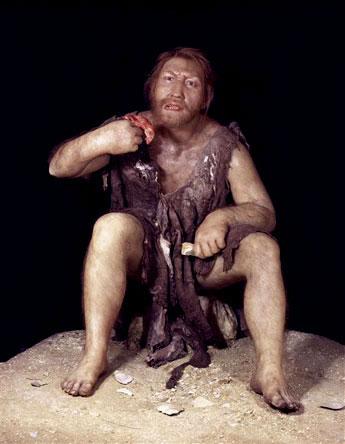
Toumai is currently the oldest known hominid: discovered in Chad in 2001, he lived around seven million years ago. then came Orrorin (six million years ago) discovered in Kenya in 2000 and the famous Australopithecus Lucy (around three million years ago) in Ethiopia in 1974. These hominids, along with many others, were all born in Africa, the continent on which humans originated. For this reason, we say that "Africa is the cradle of humanity”. The world of hominids is varied and complex. It includes Australopitheci, the Homo ergaster, erectus, sapiens neandertalensis and sapiens sapiens to name but a few. The links between them are still difficult to prove. Over time, some would die out, others evolve and move about according to their food needs, the climate and their curiosity. For the last 12,000 years, Homo sapiens sapiens is the only survivor. He inhabits our entire planet.
Votre panier est vide
Besoin d'inspiration ?
Rendez-vous dans le programme en ligne du GrandPalais

SISTERS, Jim Britt, 1976
Girls
Exhibitions Upcoming
Adolescence, Fashion, Rebellion
December 9, 2026 - March 21, 2027

Mika Ninagawa
with EiM
Alive with Shadows
Exhibitions Upcoming
December 16, 2026 - March 21, 2027

Paul Cezanne, La Montagne Sainte-Victoire au grand pin, vers 1887, huile sur toile, 66.8 x 92.3 cm
Exhibitions
September 23, 2026 - January 17, 2027

Paris Photo, 2025
Salons & foires Upcoming
November 12 - November 15, 2026

Chroma XXIII (2003-2025) Darmstadt Ferienkurse 2025 Justus Liebig Haus
Rebecca Saunders, Ensemble Intercontemporain
Chroma I–XXIV (2003–26)
Shows & performances Upcoming
Nouvelle version XXIV
November 21, 2026 - Sold out on our website
See content : 5 things to know about Paul Cezanne before visiting the exhibition

Paul Cezanne, Pichet de grès, 1893-1894, Fondation Beyeler, Riehen-Bâle
Article -
Considered one of the pioneers of modern art, Paul Cézanne had a profound impact on art history. Yet his work long baffled his contemporaries. Why did he paint so many apples? Which artists did he inspire? And why does his work resonate so strongly today? Here are five keys to better understanding his influence before visiting the exhibition “Cezanne and Us,” on view at the Grand Palais through January 17, 2027.
Widely regarded as one of the pioneers of modern art, Paul Cezanne left a profound mark on art history. Yet his work long baffled his contemporaries. Why did he paint so many apples? Which artists did he inspire? And why does his work resonate so powerfully today? Here are five key insights to help you understand his influence before exploring "Cezanne and Us", on view at the Grand Palais until January 17, 2027.
See content : Mika Ninagawa with EiM, "Alive with Shadows": Tickets are now on sale!

Article -
Vibrant flowers and saturated colors, plays of light, and immersive sensory installations: from December 16, 2026, to March 21, 2027, Mika Ninagawa takes over the Grand Palais with her collective EiM to present an exhibition designed to be walked through...
See content : "Cezanne and us": 5 resources to guide you

Paul Cezanne, La Montagne Sainte-Victoire au grand pin, vers 1887, huile sur toile, 66.8 x 92.3 cm
Article -
At the Grand Palais, the works of Cezanne and the artists he inspired await you. To make your visit an unforgettable experience, we’ve put together a range of helpful tools to guide you through the exhibition, deepen your understanding, create lasting...